
In this blog, we explore what a UNESCO World Heritage Site is and why its important. We will look into the 10 countries with the most sites and the greater impact it has.
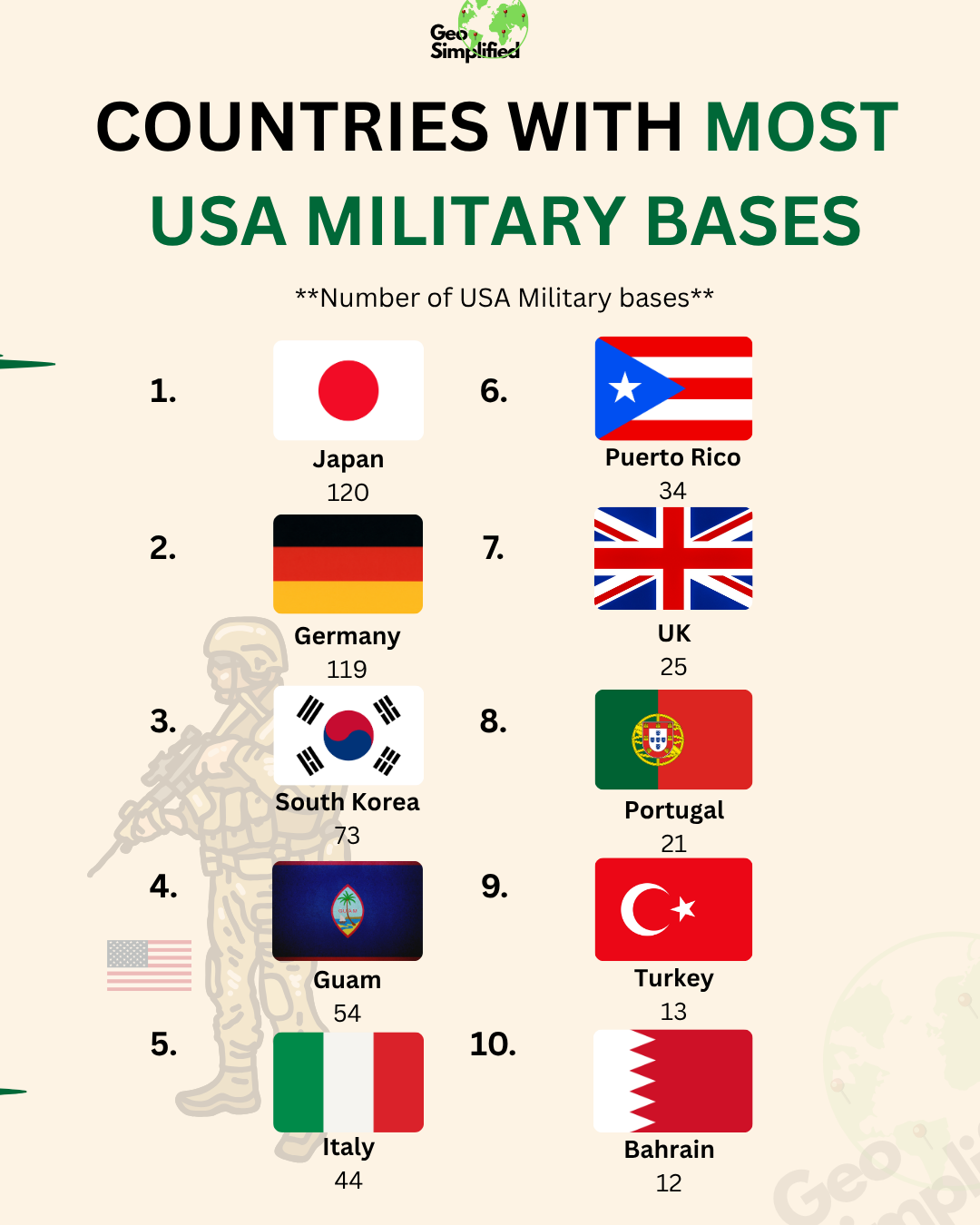
When it comes to military bases rather than just personnel numbers, the picture shifts slightly. Japan again leads with 120 military bases, followed closely by Germany with 119 bases. South Korea comes in third with 73 bases, demonstrating the continued importance of the Korean peninsula to American military strategy.
Guam, though a US territory, ranks fourth with 54 bases, serving as a critical hub for Pacific operations. Italy has 44 bases, while Puerto Rico (another US territory) hosts 34. The UK has 25 bases, Portugal 21, Turkey 13, and Bahrain rounds out the top ten with 12 bases.
The concentration of bases in Japan and Germany reflects not just the size of the military presence, but the infrastructure built up over decades. These bases range from large operational headquarters to smaller logistics and communications facilities.
Why This Global Presence Matters
This extensive military footprint serves multiple purposes. It allows the US to respond quickly to crises, supports regional allies, and maintains what military strategists call “power projection” – the ability to deploy force anywhere in the world rapidly. However, this presence also comes with significant costs, both financial and diplomatic.
Some host nations welcome the economic benefits and security guarantees that come with US bases, while others view the presence more critically. In recent years, debates have intensified in countries like Japan and Germany about the role and necessity of American bases, particularly as geopolitical dynamics shift.
The numbers also reveal how historical alliances continue to shape current military strategy. The heavy presence in former World War II theaters like Japan, Germany, and Italy, alongside the Korean War legacy in South Korea, shows how past conflicts create lasting strategic commitments.
The global military presence of the United States reflects a complex web of historical alliances, strategic interests, and ongoing commitments. Whether this level of global deployment continues in its current form will depend on evolving threats, diplomatic relationships, and domestic political considerations. Hope you enjoyed.